Jeep has detailed its new operational roadmap, titled ‘Jeep 2.0,’ which positions India as a primary manufacturing and export pillar for the Asia Pacific region. The strategy focuses on a significant overhaul of the brand’s cost structure and a long-term commitment to the domestic market through increased component sourcing and a revamped ownership framework.
Localisation and Manufacturing Strategy
A central tenet of the Jeep 2.0 plan is the aggressive pursuit of vertical integration. The brand aims to increase its local content from the current 65–70 per cent to a target of 90 per cent. This move is intended to improve price competitiveness and strengthen supply-chain resilience. The Ranjangaon facility near Pune will continue to serve as the production base, not only for the domestic market but as an increasingly vital export center.
- Current Localisation: 65–70%
- Future Target: 90%
- Current Export Markets: Japan, Australia, New Zealand
- Planned Export Expansion: North America and Africa
Future Product Pipeline
While the brand is solidifying its manufacturing base, the introduction of entirely new platforms is slated for a 2027 debut. In the interim, Jeep will manage its current portfolio through a series of lifecycle refreshes and the introduction of special edition variants to maintain market relevance. The brand emphasized that these updates will be engineered to meet the evolving requirements of the premium SUV segment.
Enhanced Ownership Ecosystem
To address long-term cost of ownership concerns and bolster consumer trust, Jeep is implementing a suite of service-oriented initiatives under its ‘Confidence 7’ umbrella. These programs are designed to provide a more predictable maintenance experience for owners.
- Jeep Assured: A buyback program to protect residual values.
- Extended Coverage: Multi-year warranty packages and pre-paid maintenance plans.
- Community Engagement: Continued investment in experiential platforms such as Jeep Trails and Jeep Clubs.
By pivoting toward high-level localisation and expanding its export footprint to include North America, Jeep intends to leverage India’s manufacturing efficiencies to sustain its presence in the competitive SUV landscape.
Current Jeep Vehicles in India
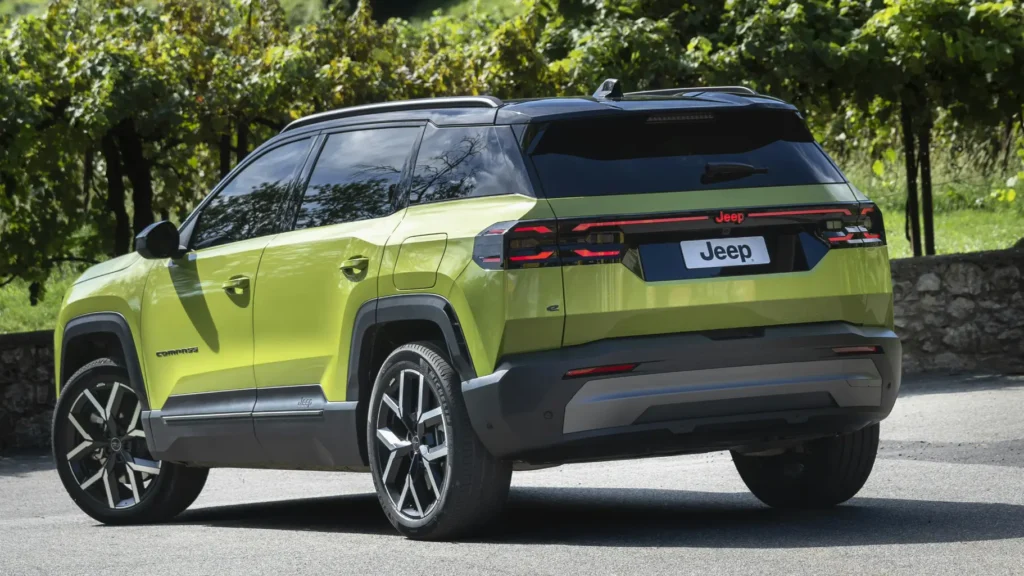
1. Jeep Compass
The Compass remains the brand’s most popular model in India. It is a premium mid-size SUV known for its build quality and driving dynamics.
Engine: 2.0L Multijet Diesel (Petrol variants were discontinued previously, though special editions occasionally pop up).
Available in 4×2 and 4×4 (Trailhawk) configurations.
2. Jeep Meridian
The Meridian is essentially a three-row, 7-seater version of the Compass, designed to compete with the Toyota Fortuner and the MG Gloster.
Engine: 2.0L Diesel (170 hp).
Highlights: Focuses more on premium cabin comfort and extra space for families.
It was recently refreshed with 5-seater and 7-seater options to broaden its appeal.
3. Jeep Wrangler
A legendary off-roader, the Wrangler is locally assembled in India (CKD), which helps keep its pricing more competitive than a full import.
Engine: 2.0L Turbo Petrol.Variants: Usually sold in Unlimited and the more hardcore Rubicon trims.
Highlights: Removable doors/roof and heavy-duty 4×4 hardware.
4. Jeep Grand Cherokee
The flagship luxury SUV in the India lineup. Like the Wrangler, it is also locally assembled.
Engine: 2.0L Turbo Petrol.
Highlights: Features a massive tech suite, including a dedicated passenger-side screen and Level 2 ADAS. It competes with the BMW X5 and Mercedes-Benz GLE.