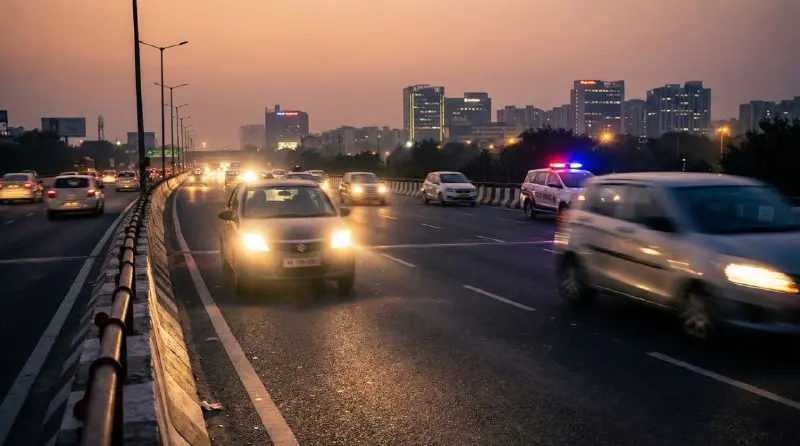
In a significant shift in traffic enforcement, the Delhi Police has begun filing criminal cases against motorists caught driving on the wrong side of the road. This strategy, aimed at curbing “hazardous” behavior on the capital’s thoroughfares, makes Delhi the first Union Territory to utilize criminal law for such traffic infractions. To date, three First Information Reports (FIRs) have been registered under this new directive.
The Legal Framework and Penalties
Offenders identified in high-risk scenarios are now being booked under Section 281 of the Bharatiya Nyay Sanhita (BNS) 2023. This legal escalation introduces more severe consequences compared to standard traffic citations:
- Potential Incarceration: Violators may face up to six months of imprisonment.
- Financial Penalties: A fine of Rs. 1,000 can be imposed under the BNS, in addition to the existing traffic fine of up to Rs. 5,000.
- Vehicle Impoundment: Authorities have the power to seize the vehicle involved in the infraction.
Current reports indicate that the offenses registered under these provisions remain bailable, with those arrested so far being released on bail during the legal process.
Criteria for Filing Criminal Charges
The Delhi Police clarified that criminal action is reserved for specific circumstances rather than routine violations. FIRs are triggered when traffic officials observe driving behavior that poses an immediate threat to public safety, such as navigating against the flow during peak traffic hours or creating “high-risk” obstructions. Standard wrong-side driving incidents that do not meet this threshold of endangerment will continue to be processed through traditional traffic fines and regulations.
Addressing Road Safety
The transition to criminal prosecution reflects an effort to address the persistent issue of wrong-side driving, which remains a primary cause of road accidents and traffic congestion in the city. By increasing the severity of the legal consequences, authorities aim to create a stronger deterrent against a practice that frequently leads to severe collisions.