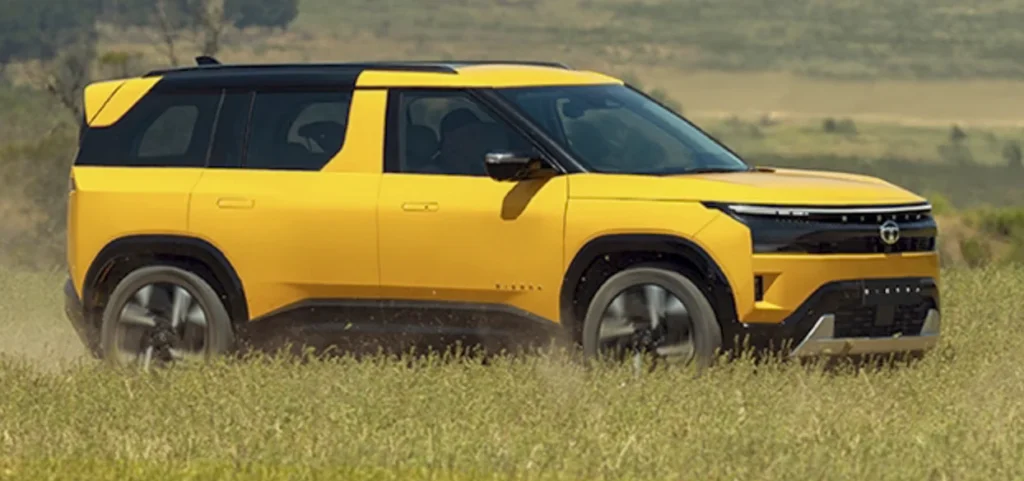
The return of the Tata Sierra moniker to the Indian market has been accompanied by a significant focus on structural integrity and occupant protection. While the SUV has officially commenced its market journey with a starting price of Rs 11.49 lakh, the formal certification process for its crashworthiness is currently underway. Historically a leader in vehicle safety, the manufacturer has positioned the Sierra as a flagship product that aims to uphold the five-star standards established by its existing SUV portfolio.
Internal Car-to-Car Crash Evaluation
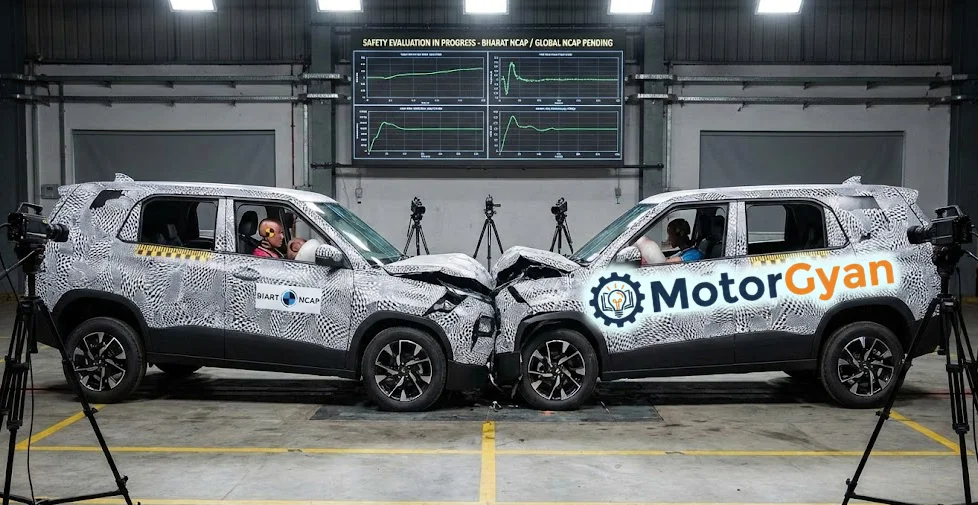
In an industry-first move during the model’s unveiling, Tata Motors showcased a full-scale car-to-car head-on collision involving two Sierra units. This internal test was conducted at a speed of 50 km/h with a 50 percent offset, designed to simulate real-world accident scenarios that often exceed the parameters of traditional regulatory barrier tests.
The results demonstrated that the Sierra’s cabin remained largely intact, with the A-pillars maintaining their structural form and the doors remaining functional post-impact. This demonstration served to highlight the robustness of the vehicle’s “Atlas” and “Acti.ev” derived platforms, which utilize high-strength steel and reinforced load paths. While this internal demonstration provides a preliminary look at the tata sierra safety rating potential, it does not replace the standardized protocols of independent testing agencies.
Anticipated Bharat NCAP and Global NCAP Performance
As of early 2026, the official TATA Sierra BHARAT NCAP rating has not yet been released. Bharat NCAP, India’s indigenous safety assessment program, typically conducts evaluations in the months following a vehicle’s market introduction. Given that stablemates like the Safari, Harrier, and Curvv have all secured the maximum five-star certification under Bharat NCAP protocols, industry analysts and safety experts expect a similar outcome for the Sierra.
Similarly, the TATA Sierra Global NCAP rating remains a point of high interest for prospective buyers. While many Indian manufacturers are now prioritizing Bharat NCAP, Global NCAP continues to serve as an international benchmark for safety. The Sierra’s chassis is engineered to meet global standards for both adult and child occupant protection. The inclusion of localized reinforcements and advanced restraint systems suggests that the vehicle is well-prepared for the rigorous side-impact and pole-impact tests conducted by these organizations.
How NCAP Ratings are Determined and why They Matter
NCAP programmes evaluate a vehicle’s crashworthiness through standardised dynamic tests and check the presence and effectiveness of safety assist systems. Adult occupant protection and child occupant protection are measured in frontal-offset and side-impact scenarios, while pedestrian protection and safety assist features are scored separately. Bharat NCAP applies a protocol suited to Indian road environments and factors in vehicle equipment that is commonly fitted in the market.
For buyers, the Tata Sierra Global NCAP rating or the Tata Sierra Bharat NCAP rating will serve as an independent verification of how the vehicle protects occupants in common real-world collisions. NCAP outcomes also influence resale perceptions and insurance underwriting, so the stakes are significant for manufacturers and consumers alike.
Child Occupant Protection: Equipment and Practicality
Child occupant protection depends on both dynamic crash performance and the ease of correctly installing child restraints. The Sierra ships with ISOFIX anchors and three-point seatbelts for rear occupants, and many variants include clear guidance for correct child-seat installation. These features increase the likelihood of a good child-occupant score.
In NCAP tests, the bulk of child occupant points come from measured performance in crash dummies and from the availability and usability of restraints and anchors. The Sierra’s standard ISOFIX and clear anchorage points make it well positioned to score strongly in this area, provided the dynamic crash performance protects rear-seat occupants similarly to the front.
Expected Adult Occupant Protection Outcome
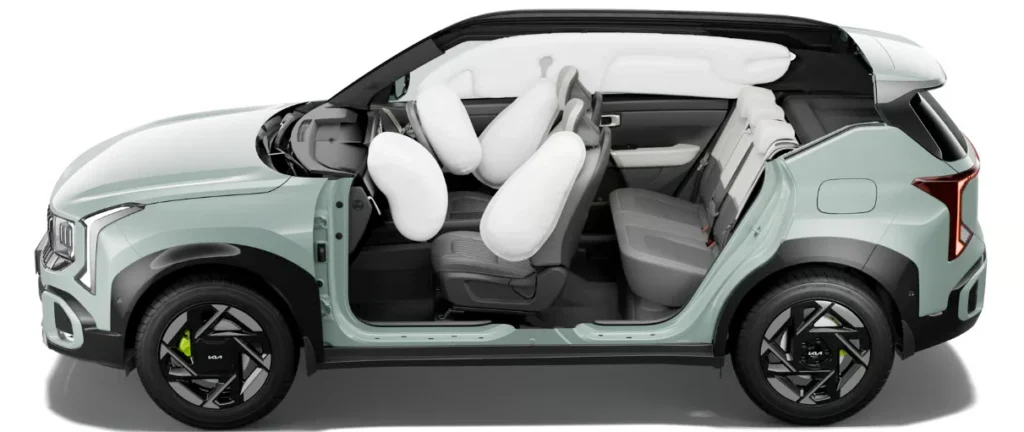
Given the reinforced passenger cell, the standard six-airbag layout and the presence of ESC, a realistic projection for the Tata Sierra safety rating—specifically the adult occupant protection component—is that it should perform at the higher end of the NCAP scale. In practical terms, this means the Sierra is likely to target a four-star or five-star outcome for adult occupant protection in both Global NCAP and Bharat NCAP testing, assuming the structure behaves as intended under dynamic loading.
That projection rests on the principle that modern structural design combined with adequate restraint systems and multiple airbags tends to produce strong results in standard frontal and side impacts. Final confirmation, however, will depend on measured results in specific test protocols and on any marginal readings for chest or leg injuries to the crash test dummies.
Expected Child Occupant Protection Outcome
The Tata Sierra is well equipped to secure a favourable child occupant protection score. ISOFIX anchors, top tethers and rear-seat three-point belts are present across most trims, and the interior architecture allows recommended child-restraint positions. If the Sierra’s rear-seat geometry and restraint routing perform well in dynamic tests, its child occupant protection score is expected to be strong and could contribute to an overall high NCAP rating.
Standard Safety Features and ADAS Suite
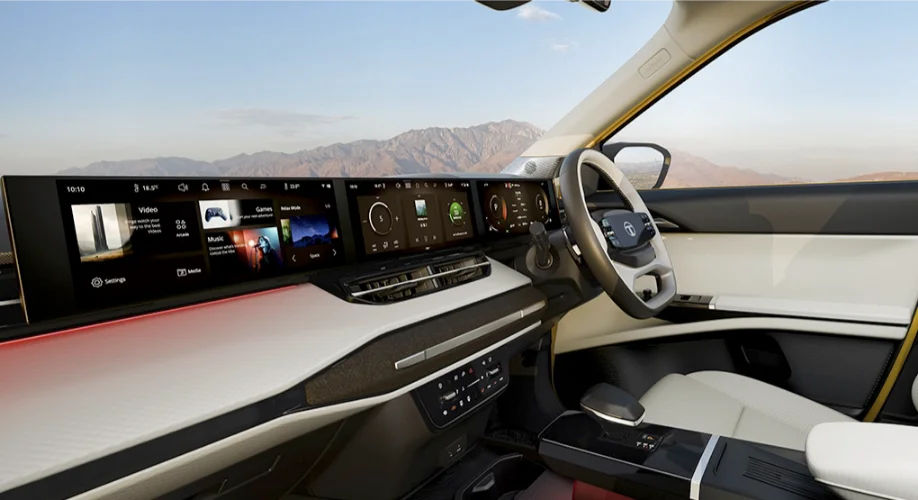
To ensure a high safety score, the Sierra comes equipped with a comprehensive list of active and passive safety technologies. Every variant of the SUV, starting from the base ‘Smart Plus’ trim, includes six airbags, Electronic Stability Control (ESC), and all-wheel disc brakes as standard equipment.
Higher trim levels, specifically the ‘Adventure’ and ‘Accomplished’ variants, feature a sophisticated Level 2 ADAS (Advanced Driver Assistance Systems) package. This suite includes:
- Autonomous Emergency Braking (AEB): Capable of detecting pedestrians, cyclists, and other vehicles.
- Adaptive Cruise Control: With stop-and-go functionality for highway and urban traffic.
- Blind Spot Monitoring: Integrated with a 360-degree camera system to eliminate visual gaps.
- Lane Keep Assist and Departure Warning: Providing active steering inputs to prevent unintentional lane drifting.
These electronic aids are critical components that agencies evaluate when determining a modern five-star rating, as they transition the focus from surviving a crash to preventing one entirely.
Market Implications and Future Ratings
The upcoming release of the official tata sierra safety rating will be a pivotal moment for the brand as it competes against rivals like the Kia Seltos and Mahindra XUV 7XO. In the current Indian automotive climate, a high safety certification has become a primary driver of consumer intent, often outweighing aesthetics or fuel efficiency in the premium SUV segment.
Looking ahead, the manufacturer has confirmed that the Sierra EV, scheduled for release later in 2026, will undergo the same rigorous safety evaluations. The electric version is expected to share the high-strength floor structure required to protect the battery pack, which often contributes to an even more rigid passenger cell. Formal crash test results from Bharat NCAP and Global NCAP for the internal combustion engine (ICE) versions are expected to be published by the second quarter of 2026.